02 · Gamified learning scenario
Project “Mothers”
A Biology and Geology learning scenario for Year 10 (ages 14–15) in which students join a secret academy, the BioAcademia de Canarias. Their mission: to train as midwives and obstetricians and support and diagnose mothers-to-be through pregnancy and birth.
Immersive narrative · Role play · Medical cases · 15 sessions · Google Workspace, Kahoot and BookCreator · Used in the classroom
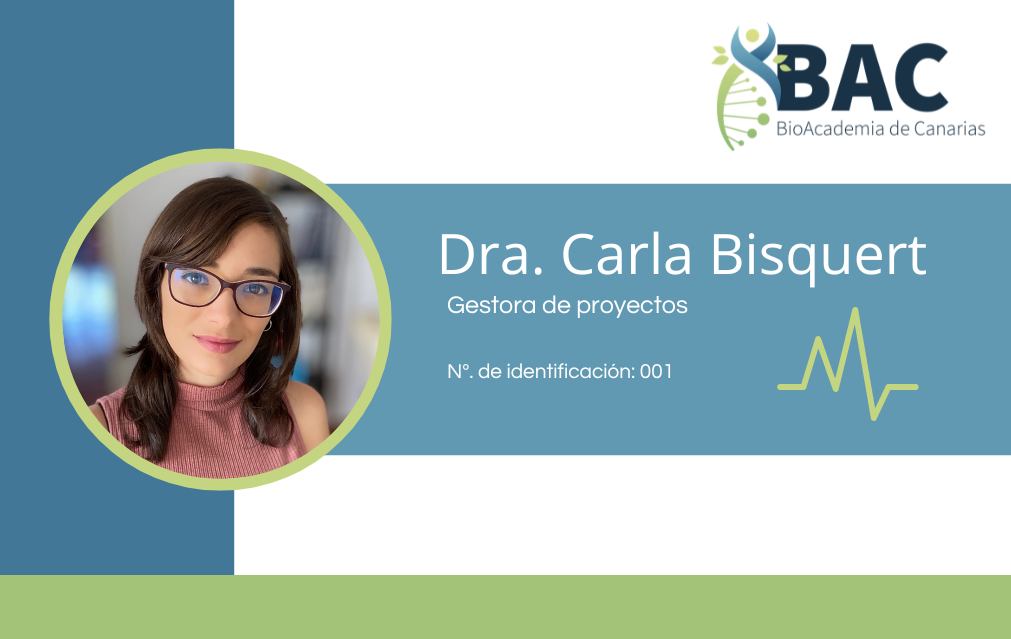
The academy staff card, part of its visual identity.
The starting point
The project grew from two ideas: there is a lot of misunderstanding about reproduction, pregnancy and birth, and there are not enough reproductive health professionals. So students do not study the topic as a list of concepts: they practise it. They read a patient's data, make decisions and explain them, and they discover that caring for mothers is a job for the whole of society.
Audience
Year 10 students (ages 14–15) in Biology and Geology, in the Spanish secondary system.
Length
15 sessions across April and May, a hospital visit and spare sessions.
Outputs
A medical report, a case presentation and a digital magazine for local health centres.
Delivery
Face to face, with a remote version ready for every activity.
An academy that lasts all year
I created the BioAcademia de Canarias with its own logo, colour palette and documents: staff cards, patient files and clinical reports. It is all part of the game, and the game does not start or end with this unit.
Hand-picked staff
The class is not a class: it is the academy, and every student has been chosen for its training programme.
One specialty per unit
Each learning scenario unlocks a new medical specialty. This one is reproductive health: pregnancy and birth.
A medical portfolio
Worksheets, reports and self-assessments go into a personal portfolio that grows from September, on paper and online.
8 missions in 4 phases
The sequence follows Merrill's First Principles of Instruction: activate what students already know, demonstrate, apply and integrate.
01
Activate
Myths and facts: a true-or-false Kahoot that brings out what students think they already know.
02
Demonstrate
The menstrual cycle and fertilisation, development in the womb with a flipped classroom, and pregnancy check-ups.
03
Apply
Medical cases of pregnant patients, a debate on shared parenting and self-assessment.
04
Integrate
A digital magazine on health in pregnancy, made in BookCreator and published through QR codes.
Mission 5 · The heart of the project
In the clinic
The classroom becomes a maternity unit: six teams of four, each with a different patient. Every visit brings new data, and with it, new questions.
01
Read the file. History, habits, symptoms and test results.
02
Research. Their patient's conditions, focusing on those most common in the Canary Islands.
03
Write the report. Diagnosis and treatment plan, individually.
04
Present the case. To the other teams, with peer assessment.
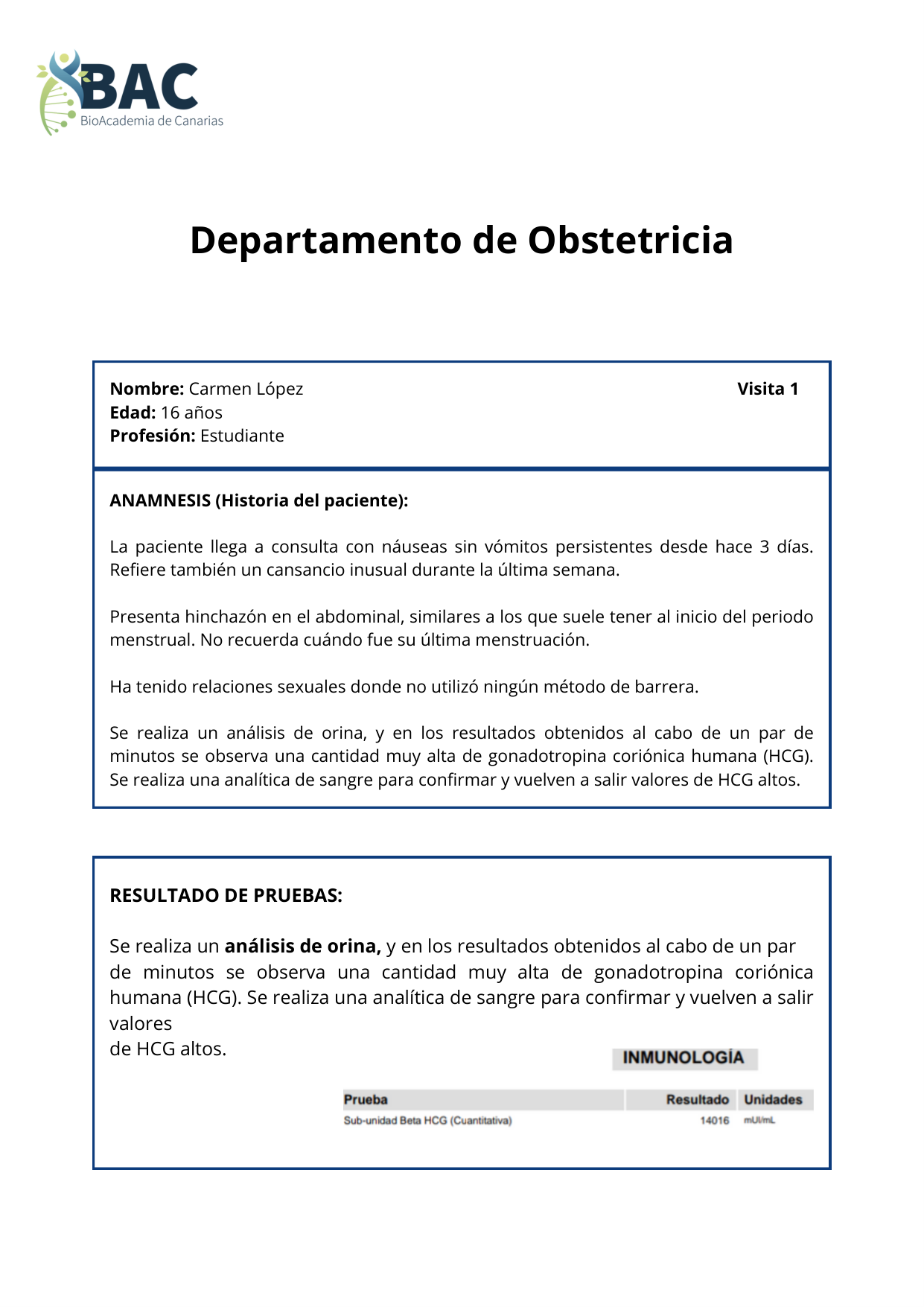
Visit 1: the patient arrives with nausea and tiredness.
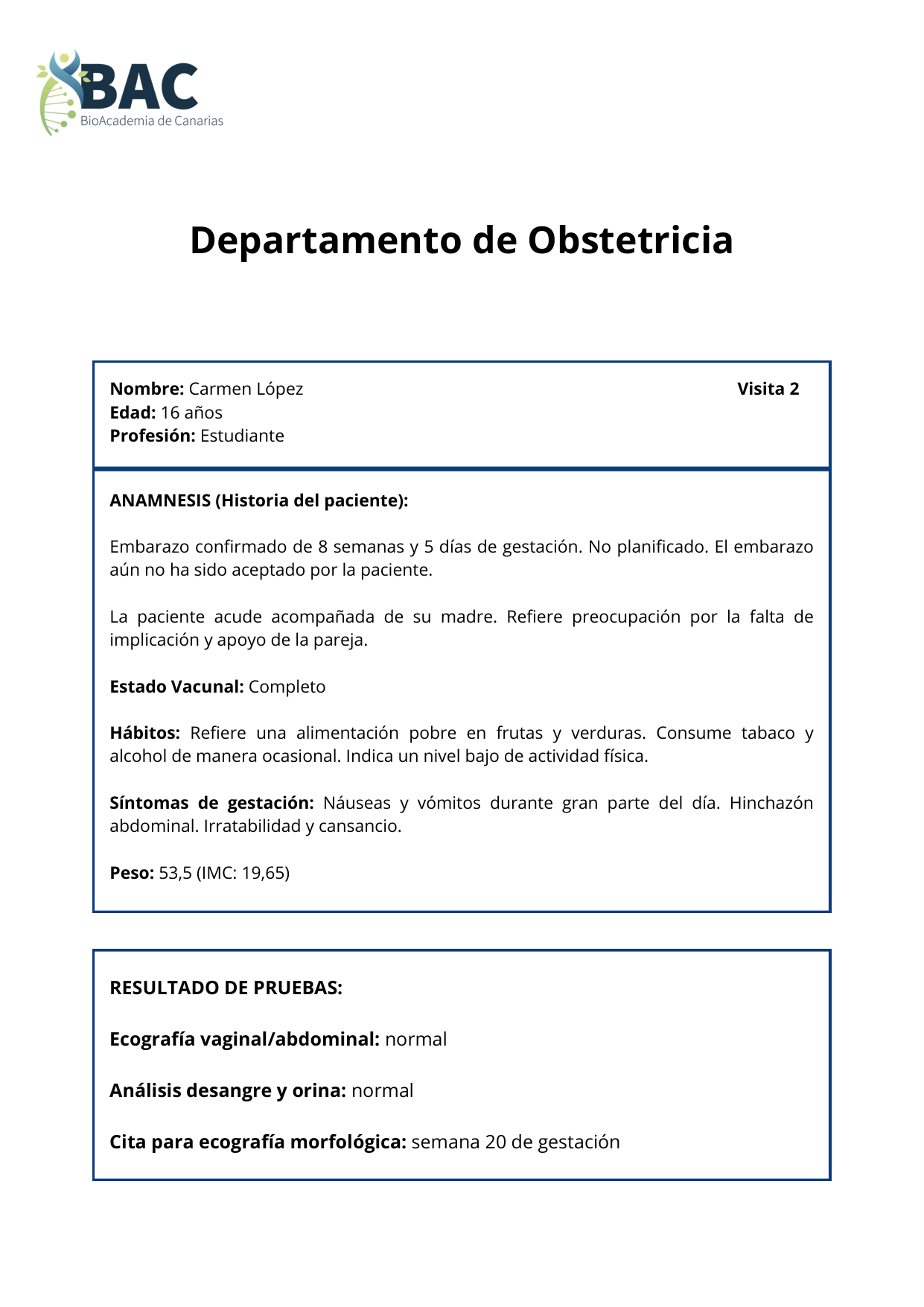
Visit 2: the pregnancy is confirmed and the case changes.
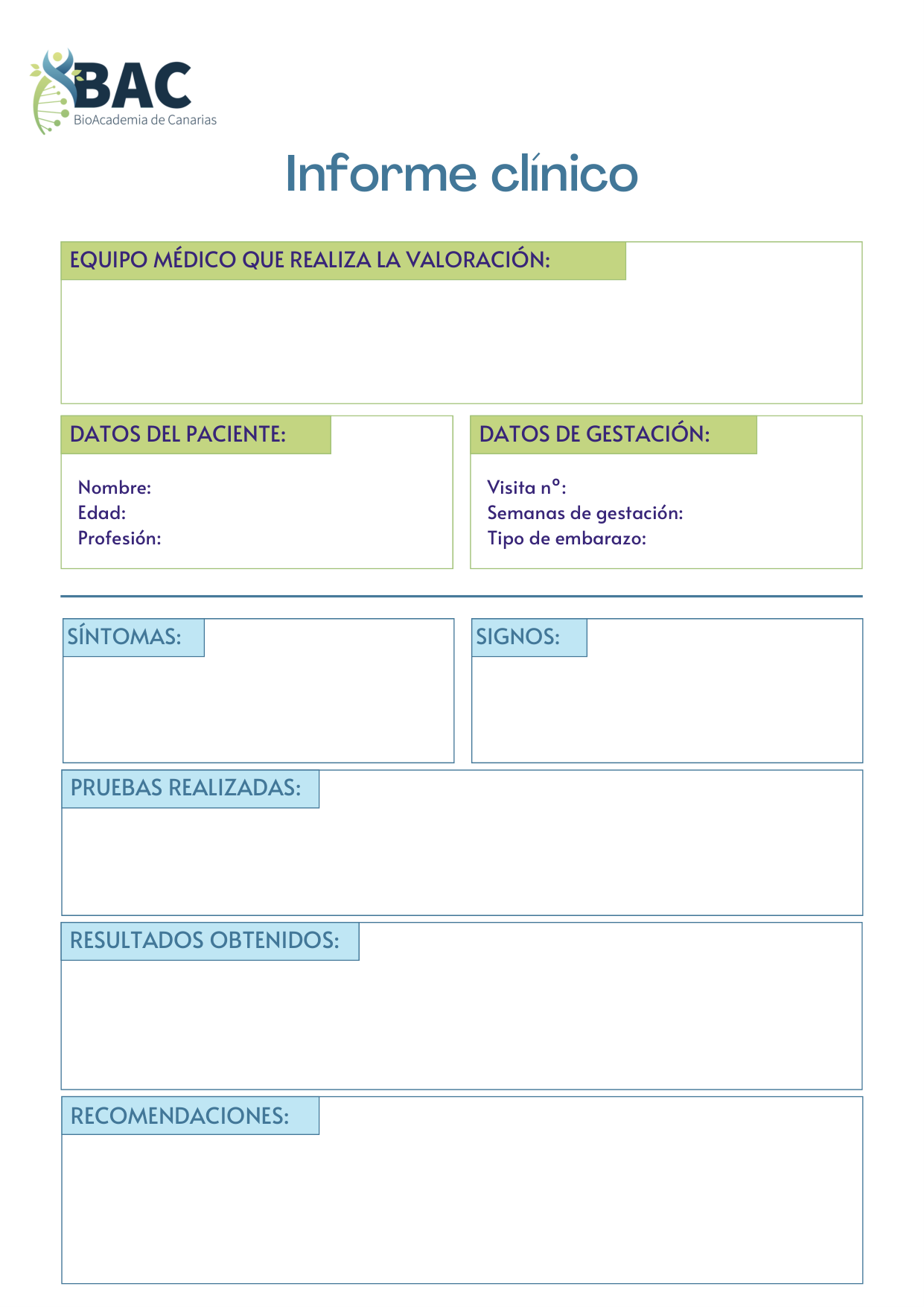
The clinical report template each student fills in.
Original materials from the learning scenario, in Spanish. The patient is fictional.
Beyond the classroom
Hospital visit
Students tour the maternity ward and delivery rooms of a maternity hospital and talk to a midwife and an obstetrician before putting on the white coat.
A real audience
Their digital magazines are published through QR codes in the maternity areas of the local health centres.
For every student
Universal Design for Learning: a choice of formats, mixed-ability teams with co-teaching support, live transcription for students learning Spanish and a shared medical glossary.
What happened in the classroom
I put it into practice with my Year 10 students and it worked. I asked them to bring a white coat, and once they put it on, the classroom stopped being a classroom: it was the clinic.
Eager to come to class
Students loved it. They came to the academy lessons eager to start and stepped into their role with ease.
Full immersion
Every student brought a white coat. Wearing it, role play stopped being an exercise and became their job.
Better results
They learnt a great deal, and it showed in their marks, which clearly improved.
If I designed it today
The project dates from 2024 and was already aiming higher. These are the improvements I would bring to a new version.
Full gamification
Points, badges and ranks inside the academy, which were already part of the original idea.
More immersive simulations
Interactive cases in which every decision changes how the patient's story unfolds.
Continuous feedback
More moments for self-assessment and instant feedback at every visit.
